
Now and Then, Part 2
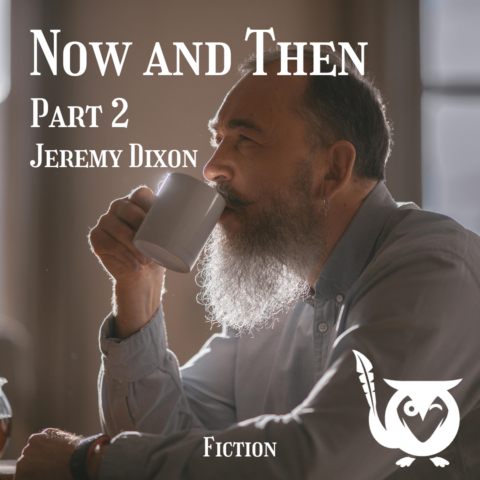
Image by Mikhail Nilov from Pexels
**Content warning: Mental health, dementia**
This is a two-part story. Read Part 1 first.
“Where is that silly girl with our breakfast?” Harry blustered, red-faced and breathing noisily. “Are we to wait all morning?”
Julia wiped her eyes and sat back in her chair. She looked like she might cry.
The waitress arrived with their food. “How’re you two gettin’ along?” she asked as she unloaded the tray.
Harry blushed a little, then huffed and nodded.
“I’m having a wonderful time,” Julia said.
Harry straightened himself in his seat, pretending not to hear, and glanced unnecessarily around the room to avoid the waitress’s questioning gaze.
“Good,” the waitress said, her face broadening with a smile, “I’m pleased.” She left.
“Have you any plans? When you see your father?” Harry asked, cutting a large piece of bacon and putting it into his mouth. “It’s such a lovely morning.”
“I’m not sure,” Julia replied, spreading some marmalade on a piece of toast, “I haven’t thought that far ahead.”
“What does he like?”
“I don’t know.” She paused for a moment to slowly chew a mouthful of toast. “I think he likes history.”
“Oh, then you must take him to the castle, it’s fascinating. It was besieged during The Civil War — terrible really.” He sliced a mushroom. “It’s quite a climb, but you could take a taxi if it’s too much for him. My wife,” he continued, sipping his tea and savouring the phrase, “my wife found it a little dull.” He chuckled mischievously, looking at her again — and there it was.
The resemblance was stronger than before. He stopped talking, shivered a little as the fog curled in and swirled all around him. Not now, he thought, not now — but his dread evaporated as an image formed in his mind. They were together, his wife and Julia, but she didn’t look like this.
He held his breath and tried to focus as the dining room blurred away again. They were standing at a chunky pine table with heavy turned legs, in a kitchen with cream painted walls and a clay tiled floor, and a cast stove built into a soot-stained, brick alcove. His wife and a little girl, laughing, elbows deep in flour which spilled like snow from a huge earthenware bowl.
Harry screwed his eyes up tight and snatched at the scene, desperate to grab it, to hold on to it, to understand it, but he was too eager and it was too fragile; like a hammer through glass, it shattered — and a door, massive, dark, and too heavy to open, slammed in his face.
He watched Julia. She was staring through the window, her wonky smile fixed on her face. He followed her gaze: A tall man, wearing a white shirt and tan trousers was walking along the paved footpath, holding the hand of a little girl with a ribbon in her hair. She skipped alongside him.
Harry looked at his own hand, and then at Julia’s resting on the table, and wished he could hold it. A tear seeped from his eye and gathered in the pink wrinkle below it, then he pulled his hand back.
“I think you might too,” he said, as the room formed again around him, “find it a little dull.”
“Tell me about her, please. Your wife — your life.”
He frowned, smiled, then gently nodded. He put down his cutlery, dabbed the corners of his mouth with his napkin, and began to talk. Julia listened attentively. She smiled and laughed and cried a little, concentrating so closely. It was as if she was terrified of missing even a single word.
He spoke about his job at the bank and the pretty dressmaker who worked in the shop opposite, whom he’d somehow managed to talk into going out for a fish supper with him on the back of his Triumph Thunderbird. He talked about Friday nights at the pictures; late night walks on Market Street; and best of all, The Plaza, where he would take her dancing.
That was what he liked most, because that was where she shone, where she was her most beautiful, where she sparkled more brightly than the mirror ball which spun above their heads as she twirled to the big band tunes in her green, flowered mini dress. Her cinnamon curls bouncing; her round, marmalade eyes twinkling; and wearing a wide, wonky smile.
The waitress was waiting for them in the foyer when they left the dining room. Harry took the half crown out of his pocket and pushed it into her hand, closing her chubby, pale fingers around it.
“I hope it goes well,” he said, smiling at Julia, “with your father.” Then he left to go sit in the lounge, in the leather armchair in the bay window to wait for his wife. His wife, whom he missed dreadfully by this time in the morning.
***
Julia watched Harry leave, then turned to the nurse, who was studying the ten pence piece that Harry had given her with narrow pursed lips and a wrinkled brow.
“He’s tipping you,” Julia said, “he thinks you’re a waitress.”
The nurse chuckled and shook her head. “He gives it me, every mornin’, then I slip into his room and put it back on the shelf beside his bed,” she said, dropping the coin into the pocket of her uniform.
“So, I’m guessing he still thinks he’s on holiday,” Julia said, glancing across the hall towards the lounge door.
“Every day.”
She blew out her cheeks and shook her head. “Where?” she asked.
“Not sure — I’ve not been able to work that out yet. There’s a castle an’ a sea-front, but that’s as far as I’ve got.”
Julia frowned. She crossed her arms and leaned back to rest on the wall. She made an elegant figure, like a Renaissance statue. “Where does he think I am? — and Mum?”
The nurse sighed noisily. “I think you’re not born yet. And your mum, it depends on the time of day. In the mornin’ she’s gone for a walk. In the evenin’ she’s at a performance — chamber music, I think. He pulls a face when he tells me about it,” she said with a chuckle, “but I don’t know why he’s not gone with her.”
“Classical music.” Julia laughed. “He hates it, always did. She banned him from going because all he did was moan.”
The nurse grinned and nodded knowingly. She had her hands in the pockets of her uniform, rolling the coin in her fingers. “The best one’s in the afternoon,” she continued. “Your mum’s met someone for tea, someone he can’t stand. Most likely invented, he only has a nickname for her.”
The nurse laughed, a proper laugh that shook her whole body. “He pulls such a face when he mentions her. Calls her The Empress.”
Julia’s eyes stretched wide, and she sprung off the wall to stand upright, holding her hands over her open mouth. She bounced on her toes, fizzing like a freshly opened bottle of pop, and she giggled as she spoke. “The Empress — you said ‘The Empress’?”
The nurse nodded.
“That’s what he calls Aunt May,” she cried, “from P.G. Wodehouse!” She thought for a moment, biting her lower lip, kneading her slender fingers together, so that her fingertips were white. “He’s in Scarborough, and this—” She spun around like a ballet dancer, her eyes turned to the ceiling, her hands in the air, her dress twirling about her. “—this is The Alhambra!” She laughed.
Then she stopped suddenly, her legs wobbled, and her smile collapsed as a new realisation hit her, like a hammer blow to her chest. “Oh,” she gasped, reaching for the wall, and slumping against it.
“What?” The nurse stepped towards her and took hold of her trembling arm.
“Is it ’61?” Julia asked.
“What?”
“Is it ’61? 1961? Could it be? Could it be ’61?” She squealed, grabbing the nurse’s hands so hard that she jumped.
“Maybe,’” the nurse replied, prying her hands free. “It could be — I don’t know. He complains all the time about Macmillan, an’ panderin’ to the unions — I don’t know, is that ’61?”
Julia sniffed and wiped her eyes with the palms of her hands and released an excited, half laugh, half cry. She walked towards the doorway to the lounge, stopping at the entrance and looking at the frail old figure sitting motionless in the leather armchair in the bay window, staring silently through the glass.
The nurse walked across and stood beside her.
“He’s on his honeymoon,” Julia whispered, her voice destroyed.
The nurse took her hand and squeezed it gently.
“Doesn’t he notice? That she never comes back?” Julia asked, her gaze fixed on her father, tears pooling in the corners of her eyes.
The nurse didn’t reply, she just continued to squeeze her hand.
Julia looked slowly around the room at the folding faces, at the resignation, the subdued acceptance. She listened to the television, playing to itself in the opposite corner, some banal daytime discussion on the season’s latest fashions.
She looked at the shelves by the door, at the piles of archaic board games covered in dust, and at the jigsaw puzzles in battered boxes that had been made and dismantled a thousand times over.
“I know,” the nurse said, after a long pause. “It’s very sad.”
But Julia was only half listening. She was concentrating on her dad. Looking at the redness in his wrinkled cheeks, at his thin lips bent into a faint smile and at the sparkle in his small, sunken eyes as he continued to stare through the glass. And all she felt was relief.
He’d escaped the grief, run away to his happy place, and found safety there. A thankful sob creased her in the middle. She smiled and laughed and blinked away her tears.
“Do you think so?” she said, glancing towards the nurse. “I find him rather hopeful.”
She entered the lounge, collected a plastic chair from a stack that was pushed against the wall by the doorway, and carried it over to the bay window. She placed it next to Harry’s.
“Do you mind,” she asked, “if I join you?”
He looked up at her and shuffled forward to perch on the edge of his seat. “I’m waiting for my wife,” he said. “She’s out for her walk.
“I know,” Julia replied. “You told me in the—” She looked towards the dining room, then glanced at his confused face and her words trailed off. “I thought maybe, I might wait with you, until she returns.” She sat down.
He grinned. “My name’s Harry,” he said, holding out his hand. “I’m waiting for my wife, she’s out for her walk.”
“Jules,” she replied, taking his hand. “I’m sure she’ll be back soon.” She didn’t let go.
Find more moving writing among our collection:
- Before They’re Gone – A warming story about family dynamics.
- Flute Tranquility – Personal essay about finding peace in the chaos.
- Tripping Over Giant Feet – Short fiction that follows a life of choices.
- Home When I Get There – Poetry in honor of a beloved father.

Jeremy Dixon
Jeremy lives near the Yorkshire coast, where he works part-time as a builder. He graduated with a B.A in 'English Literature and Creative Writing' from The Open University and now teaches creative writing night classes for his local adult education organisation. His fiction has been published in the 'Glittery Literary Anthology Four', and with 'Sky Island Journal', ‘Loft Books’ and ‘The Mocking Owl Roost.’ He has also, recently had a story accepted for ‘The York Literary Review, 2023’.
Follow Jeremy on Twitter.