
Relating to Others With The Call of the Wild
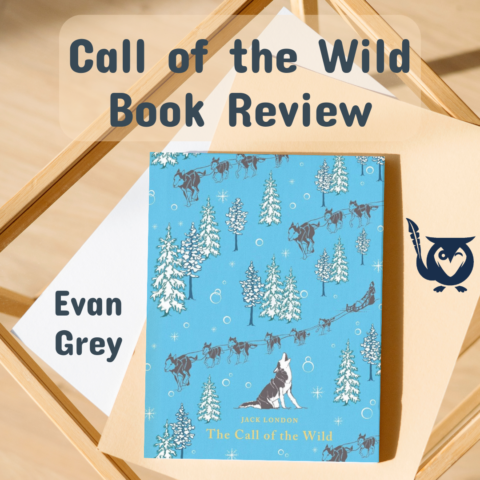
Book cover image from Simon & Schuster
The Call of the Wild by Jack London is a well-known naturalist and realist novel published in 1903. It concerns a dog named Buck, and tells of his journey from life as a domesticated animal, to a sled dog, to his eventual regression into a wild animal.
On the outside, London’s novels are simple enough for children; but if a reader spends some extra time digging, the books will reveal much deeper themes. They can be great tools for walking a mile in someone else’s shoes — or paws, as it may be.
You can buy this novel at a lot of different thrift stores if you’d like a copy to own for yourself, or you can even read it for free on Project Gutenberg!
Why Have Animals as Main Characters Anyway?
London utilizes personification — the giving of human characteristics to inhuman characters — in several of his best-known stories, and to great effect. Buck has immense thoughts and feelings despite being a dog, which lends to the reader’s ability to sympathize and relate to him, even if their lives can’t ever mirror that of a dog’s.
Buck begins the story as a simple house pet in Californian suburbia, with an easy-going life and the naivety of any sheltered pet. That quickly changes when a neighbor kidnaps him and takes him to Canada to become a sled dog. He proves himself capable as a pack leader, and soon grows to enjoy his new life.
Most readers will know what it’s like to be lost, to be moved from one place to another with little say, or how to persevere even when things are hard. London’s use of an animal character teaches us that we don’t always have to look and feel exactly like others in order to relate to them — an important lesson and theme still in today’s world.
What Stories Teach Us
Buck is a survivor: Through good times and hardships, and from master to master, he perseveres, offering readers a story of humanity through the actions of a dog. Buck shows more humanity than many of the human characters. He cares about others and loyally sacrifices much for his owners, whether or not they’ve earned or respected it.
But as the story progresses, Buck’s loyalty to his masters begins to fade. The “call of the wild” rises in his heart, and the desire to run free in the wilderness becomes harder to ignore. He stays out longer and longer, until one day, he doesn’t return.
In most literature, characters view domestication as a good thing. But in this story, London strays from the crowd, calling his readers to acknowledge that domestication can be a cage, that wild things often yearn to be free, and that it’s not wrong to follow where our needs take us.
Why We Do What We Do
The Call of the Wild allows a reader to progress tenaciously through the stages of life: To accept the hand you’ve been dealt, take life in stride and finally answer the call when it comes. Buck’s will to survive drives the story. A weaker animal would’ve given up, but Buck’s strong and natural leadership enables him to persevere.
No matter a story’s age, we can always learn something from it; we don’t call them classics for nothing! I first read this novel in college, but its less complicated writing allows the themes to stand out in a relatively straightforward manner, enabling easy access for younger readers as well.
I encourage all readers to investigate Jack London’s work. He wrote dozens of other stories, including “To Build a Fire” and White Fang. Many of these can also be found on Project Gutenberg or in a local bookstore.
Enjoyed this read? MockingOwl has more for you to explore. Check out these creative works next!
- Behind the Mask – A personal essay on identity.
- Iphigenia Murphy Review – A thoughtful review of this purposeful coming-of-age novel.
- Puppy Love – An ode to the dogs!
- I Hate Nature – A humorous essay.
🍵 We run on pure passion here at the Roost and every bit of help goes a long way! If you’d like to support our on-going efforts to keep our publication free for everyone, consider fueling us with a digital tea.

Evan Grey
Evan Grey is a creative mind who has been playing TTRPGS for about five years now and has the same amount of acting and theater experience. He is also a writer and a published poet with a BFA in Creative Writing. He has been writing for over a decade, and reading for even longer. He is currently transitioning to working on novels, with interest in genres like fantasy and sci-fi.
Find more on Instagram and Evan’s website.