
The Sims at 25: A Retrospective on a Video Game Icon
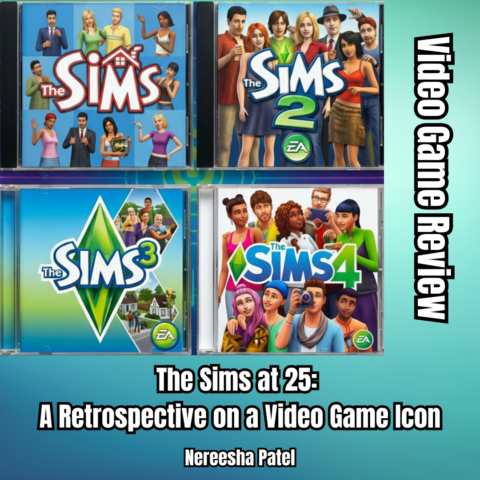
Image created on Canva
“They’re born. They die. What happens in between is up to you.”
This tagline adorns the back cover of The Sims 2, one that has stuck with me since the base game’s debut in 2004. In fact, it’s safe to say that these very words apply to the entire Sims franchise, which evolved from the simple concept of a digital dollhouse to become a global gaming phenomenon.
Developed by Maxis and unleashed upon the world by Electronic Arts (EA), The Sims was both wacky and extraordinary, turning the life simulation genre completely on its head.
For many players, the game became an outlet for their creativity. For others, it presented an escape from reality. And for more than a few, it was a chaotic-yet-amusing exercise in playing God. One could even chalk it up to all of the above.
But 25 years later, The Sims continues to resonate with its core fan base for the same reasons, even if the series has arguably lost its way somewhat.
The Sims (2000): On the Wright Path

After losing his home during the Oakland firestorm of 1991, Maxis founder Will Wright had to rebuild his life from the ground up. During that, he was struck by a spark of inspiration: Why not create a game that allowed players to create and control a “virtual dollhouse”? That is, they could design and guide simulated beings that lived in homes of the players’ making.
Nine years of research, development, and reticulating splines later, Maxis released The Sims under the EA label. The premise was simple: Create the “Sims”, move them into premade homes or build your own, and control their lives. Given the open-ended nature of the game, a player’s main goal was to satisfy the Sims’ basic needs — from hunger and hygiene to comfort.
Whether you guided your Sims to acquire new skills, buy or interact with objects like TVs or dodgy chemistry sets, climb the career ladder, or build relationships with other Sims, as long as you kept their needs in the green, you could successfully fulfill a Simlish version of Maslow’s Hierarchy of Needs.
Or, if you were like me, you disregarded Maslow in favor of screwing your Sims over in numerous, oftentimes hilarious ways. Removing pool ladders so that your Sims would meet a watery demise was a classic staple, and even staunch players might crack a grin when their creations broke the fourth wall to screech at them through the screen for food.
Not even death could be taken that seriously, as illustrated by the presence of the Grim Reaper and the ghostly apparitions of your creations. And there were even more absurd ways for your Sims to bite the dust — death by skydiver simulator, anyone?
Putting aside these aspects, though, the concept of death in a game like this introduced a layer of realism that, in several ways and despite its absurdities, helped the game to mirror our own world. The original Sims did not age in-game, save for when babies aged up to children. They were destined to remain as they had begun forever, unless the player intervened.
Why The Sims Resonated with Players
Such was the immersion of The Sims that it wasn’t unheard of for players to spend hours upon hours playing it. The replayable gameplay, and not least the ability to either rule with the kind hand of a benevolent deity or the cruel fist of a malevolent demiurge, meant that you never got bored.
Although the premade neighborhoods offered little to explore, the families that inhabited them came with big personalities. Take the Goth family, for example. I avoided the Goths on account of their backyard graveyard. However, other players adored them for their Addams Family-esque aesthetics, to the point that they became The Sims’ official mascots.
The immersion deepened with the incorporation of Simlish, the language spoken by Sims that sounded both nonsensical and incredibly expressive, thanks to the voice talents of Gerri Lawlor and Stephen Kearin. Additionally, diegetic sounds and other sound cues for certain events evoked sure realism, though I could do without the heartstopping burglar and fire stings!
The game’s music, courtesy of Jerry Martin and Mark Russo, has also become iconic, from the jazz stylings of the Neighborhood/Create-a-Sim themes to the ‘50s-inspired orchestral arrangements of Buy mode. My personal favorites always and forever will be “Neighborhood 3” from the base game and “Casting Call” from The Sims Superstar soundtrack.
Speaking of Superstar, the riveting mechanics of The Sims were further refined by the inclusion of expansion packs: adopting pets, vacationing, pursuing superstardom, and learning how to weave spells, among other features, gave players even more reason to stay glued to the computer screen.
But gaming graphics improved rapidly in that era, leading the original version to look less polished before much time had passed. Would Maxis be able to keep this burgeoning series going?
The Sims 2 (2004): A New Generation

Four years after The Sims took the world by storm, Maxis and EA added to the deluge with the second entry in the now-established franchise: The Sims 2.
The sequel built on the foundation of its predecessor, but with an exceptionally elevated gameplay experience.
For one thing, you had greater options when it came to creating your Sim, from their facial features to their wardrobe. Graphics-wise, immense effort was put into animating their body language and expressions — a departure from the stone-faced, premade sets of The Sims.
For another thing, houses that had been limited to two storeys in the previous game could now reach as high as the stars — or at least, it felt that way. Greater variety in objects and construction materials, so to speak, allowed budding architects and artists to go wild with their designs.
The introductions of family trees, genetic inheritance, and aging — complete with varying lifespans for the different life stages — made the Sims more well-rounded as well. It also prompted players to become properly emotionally invested in their Sims’ growth and well-being from birth until death. Unless, of course, you were dedicated to making each milestone a misery.
Indeed, with your Sims now having defined aspirations, wants, and fears, you could weave soap opera-like narratives revolving around making your Sims’ dreams come true or reducing them to absolute emotional wrecks. Depending on where your priorities lay, you were sure to gain satisfaction and frustration in equal measure.
As a sequel, The Sims 2 brought with it families both old and new, from the Goths and Pleasants to the Smiths and Capps. Each neighborhood featured storylines worthy of Days of Our Livesand The Bold and the Beautiful. The most famous of these is the strange case of the missing Bella Goth, and the ever-growing backyard graveyard of Strangetown’s Olive Specter.
Musically, Mark Mothersbaugh’s score was simply irresistible. I adored the harpsichord dotted throughout the base game’s tracks, and I truly felt like a stylist or construction guru when the Create-a-Sim’s “Makeover” or “Sim the Builder” started to play. The Sims 2 also started the trend of including songs by real-life musical artists — in Simlish, naturally!
Expansion pack-wise, the game introduced a mix of old and new features, notably allowing your Sims to visit university, experience different weather conditions, and live in apartments. However, the shift to newer technical specs, including the change from CD-ROM discs to DVD-ROM discs, meant that more bugs, glitches, and lags arose.
Nevertheless, The Sims 2 was a revelation of sorts. It honored the legacy of The Sims while carving its own path as a riveting life-simulation game. Additionally, it brought modding culture to the forefront, with scores of players creating and sharing their custom content on sites such as Mod The Sims and Parsimonious.
The Sims 3 (2009): Ambitious Dream, Performance Nightmare
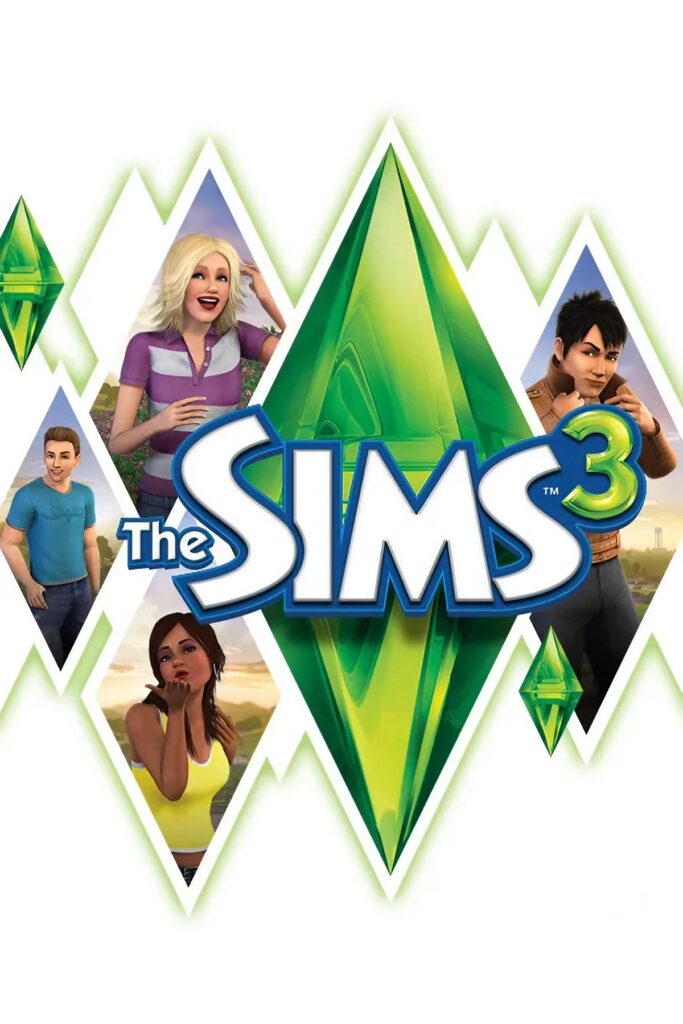
In 2009, Maxis took a bold step forward with The Sims 3. Here was a game that promised realistic graphics, greater customization options, and, most wonderfully of all, an open-world map.
In other words, loading screens were nonexistent in this virtual world. You could freely visit other Sims’ homes and community lots in real time, as opposed to returning to your home at the last save point.
And, while you could easily switch between families and neighborhoods in the previous franchise entries, most players felt compelled to stay with only one household, evolving the neighborhood they resided in through them. Players often became emotionally invested in their Sims’ lives and that of the future generations that were to follow.
Maxis yet again provided a greater range for personalizing your Sims. Indeed, the customization of Create-a-Sim was a huge highlight, thanks to its color wheel and Create-a-Style features. Players could design the finer details of their Sims, from the makeup tints and hair roots down to the patterns of their clothing — as well as their furniture!
What’s more, traits were introduced to give your individual Sims personalities. These traits helped to guide your creations’ abilities, behaviors, and wishes. A Sim with a Flirty trait, for instance, would have greater success winning over a potential partner. Brave Sims dove in to fight burglars, while those possessing the Coward trait would faint during a break-in.
Unfortunately, for all its ambition — shoutout to the Ambitions expansion pack and its brethren — The Sims 3 suffered from serious performance issues. Unless you owned a supercomputer, the game struggled to perform on older desktops and laptops because of its high spec requirements. Many players spent hours trying to overcome constant lags.
Adding to the frustration was the requirement to register your disc’s key to EA’s Origin store. Now, playing the game and its expansions required launching it from Origin — an impossibility if you weren’t logged in or didn’t have an internet connection. And the less said about Origin’s later software updates that led The Sims 3 to crash repeatedly, the better.
And, it pains me to say, the musical score was only so-so. I wish I could say that I enjoyed Steve Jablonsky’s compositions, but these failed to live up to the recognizable pieces of Martin, Russo, and Mothersbaugh. The overall string and choral arrangements do evoke a sense of whimsy, but barely enough to boost The Sims 3 into the promised realms of greatness.
The Sims 4 (2014): The Wrong Direction?

The Sims 4 is the only entry in the franchise that I have chosen not to play, so I can only review it from a distance.
When it was first announced in 2013, I was impressed by the greater flexibility that Create-a-Sim would offer in terms of sculpting your Sim from scratch, as well as the emotions feature. But the cartoonish graphics turned me off — they seemed to me to be a huge step back from the realistic details offered before.
Upon its 2014 release, I heard the rumblings: The removal of the open world and Create-a-Style features, the return of loading screens when visiting community lots, and the missing gameplay elements like swimming pools and the toddler life stage. It’s as if Maxis had regressed to square one, offering a product akin to a pretty box with a hole cut out at the bottom.
Over the course of these 11 years, countless digital expansions, game packs, and stuff packs have been released to simultaneously fill in the content gaps and create new ones in players’ wallets. Yet with each new addition, the recurring complaint I hear from players is that The Sims 4 still lacks the heart, spirit, and character that made its predecessors fun.
The Sims: What’s Next?
In the span of 25 years, The Sims has become one of the most commercially successful and recognizable game franchises ever created. Despite its imperfections, its simming community maintains a strong presence online. And the game has further solidified its iconic status through its foray into other gaming platforms and mobile devices.
But now, the question: Where does this popular life-simulation title go from here?
Sadly, plans to develop The Sims 5—tentatively named “Project Rene” — were shelved by EA in favor of providing The Sims 4 with ongoing technical support and new content packs. Any spin-offs are likely to take the form of watered-down, multiplayer apps. After all, there’s plenty of milk left in this billion-dollar cash cow to be gained.
Still, a small flame of hope for a new, improved Sims sequel that revisits Wright’s vision burns within my core. And I’ve no doubt that other players possess the same yearning.
So, between now and then, whatever happens is up to us. And if it means spending hours either on 1, 2, 3, or 4 exploring various ways to brighten our Sims’ days or driving them to fits of rage, it’s good enough in the interim.
The Sims and its various iterations are available to download on Steam.
Would you like to read more reviews like these? Check out:
- Make Your Own Board Game – A book review for tabletop game design
- Almost Paradise – Short Fiction about choosing creativity
- Top Ten Most Entertaining YouTube Channels for Dog Lovers – A roundup of highly entertaining dogs and their antics
- Hard Candy – Thoughtful poetry on life and sweetness
🍵 We run on pure passion here at the Roost and every bit of help goes a long way! If you’d like to support our on-going efforts to keep our publication free for everyone, consider fueling us with a digital tea.

Nereesha Patel
Bitten by the book bug at a young age, Nereesha has loved reading her entire life. From children’s books and young adult fare to comics and cartoon strips like Archie, Madam & Eve, and Garfield, reading also gave her a strong passion for writing. Since graduating with a Bachelor of Journalism degree from Rhodes University in 2017, Nereesha has written for publications including 2Oceansvibe Media, The Southern Cross, and Women’s Health South Africa. In this dog-lover’s spare time, she loves to cozy down with some tea and peanut butter toast, experiment with different recipes (to varying results!), and indulge in fanfiction.
You may follow her on Facebook.