

Montezuma’s Revenge
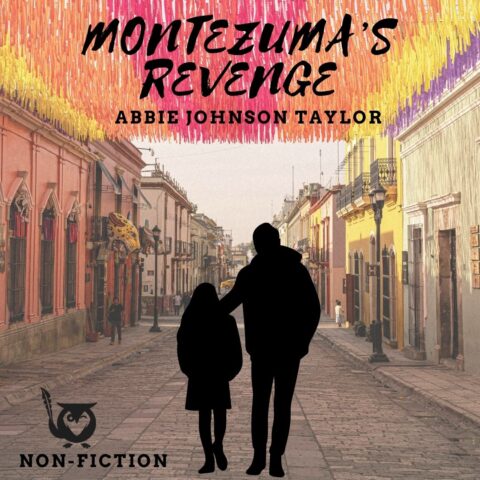
Image created on Canva
“This is a dump,” Dad said as I gazed around our hotel room in Hermosillo, Mexico. I found two double beds, no telephone or television set, and no other furniture. I peered into the bathroom, no bigger than a closet, containing a sink, toilet, and shower.
With no air conditioning in the summer heat, sweat trickled under my armpits and accumulated on my brow. According to Dad’s guidebook, this hotel’s rooms overlooked a courtyard. Our room had a view of nothing I could see. At twelve years old, I was too excited to care.
In June of 1973, after almost a year of studying Spanish, Dad and I had finally realized our dream of traveling to Mexico. After riding most of the day by bus from Tucson to Nogales, Arizona, then from Nogales to Hermosio by train, I was just glad to be here.
Though it was after midnight, I was far from tired. “I’m hungry,” I said. “Let’s find a restaurant.”
“You bet!” Dad consulted his guidebook.
We took a taxi to an establishment where I enjoyed my first meal in Mexico: cheese enchiladas with rice and beans. Afterward, we returned to our sweltering room and tried to sleep.
At four in the morning, after tossing and turning, our bodies drenched in sweat, Dad said, “I can’t stand this anymore. Let’s get out of here.”
“Should I get dressed?”
“No, just put on your flip flops, and let’s go.”
My nightgown clung to me as we carried our suitcases down the stairs to the ground floor. In the deserted lobby, Dad left the room key on the counter.
It wasn’t much cooler outside. When we found a cab, Dad told the driver, “Too hot. Can’t sleep.”
I said, “Tenemos que irnos a otro hotel porque aquí estamos achicharrándonos.”
The place where we were taken not only had air conditioning but an elevator. After we checked in, Dad, thinking I might be thirsty, said to the clerk, “Coca-Cola?”
“No. Agua,” the clerk answered.
Because we knew not to drink the water, Dad said, “No.”
Remembering the manners my mother taught me, I said, “No, gracias.”
I noticed little about the room except its coolness. I collapsed between the crisp sheets and went to sleep.
When I woke in daylight, the room appeared no different from hotel rooms in the United States. A nightstand with a telephone flanked two double beds, and a couple of armchairs and a small table stood in one corner with a television set mounted on the wall. According to my Braille watch, it was nine o’clock.
I sat up and saw Dad reading in one of the chairs. “Good morning, honey. Why don’t you get dressed, and we’ll get some breakfast?”
In the huge bathroom containing a vast tub with a shower, toilet, and sink with a long counter, I brushed my teeth, trying not to swallow the water.
In the restaurant, we ordered an American breakfast of pancakes and sausages.
Dad said, “Let’s take the bus to Guaymas, near the sea. It’ll be cooler there. You can swim in the ocean.”
“That’s great!” I said. In the hotel’s air-conditioned comfort, I was looking forward to the Mexican experience.
We took a taxi to the bus station. On the way, our English-speaking driver, upon learning we were from the United States, gave us a scenic tour of the city.
At the bus station, Dad bought two tickets to Guaymas and carried on a conversation in English with an American woman until our bus was ready to leave.
Guaymas was about three hours away. After arriving in mid-afternoon, we took another taxi to a motel overlooking the beach.
On the way, I spotted a hill and exclaimed, “Mira la colina!”
The driver chuckled, as if I’d never seen a hill before, not realizing I was thrilled at any opportunity to use the Spanish I’d learned over the past year.
At the motel — which Dad’s guidebook also recommended — we were given a bungalow with a cement porch facing the ocean with the beach only a few steps away. The room had two double beds with a nightstand, a table and two armchairs, and an adjoining bathroom with a toilet, sink, and shower. Not as grand as the bathroom in Hermosillo.
Curious about the phone on the night stand with no dial or buttons, I asked, “How do you make a call?”
“When you pick up the receiver, an operator at the front desk answers, and you give her the number,” Dad answered.
After we hit the beach, my excitement was soon dampened by the drenching ocean waves that nearly knocked me down and the awful, salty taste of the water. Since I wasn’t much of a swimmer, I stayed in the shallow water by the shore. Rocks hurt my feet, and waves slowed my progress. As Dad swam into deeper water, I longed for our neighbor’s backyard pool in Tucson.
I spotted a dock and a stretch of calm water nearby. When Dad returned, I pointed to it and asked, “Why can’t we swim there?”
“Because that’s where ships go,” he answered.
It’s not fair that ships get calm water while swimmers get waves, I wanted to point out. But I said nothing.
That night, Dad suggested we eat at another restaurant his guidebook recommended. When he told the cab driver in Spanish where we wanted to go, the driver said the restaurant no longer existed. He suggested another that specialized in seafood, and we went there. I didn’t like fish, but I didn’t say anything.
Dad ordered lobster for both of us. He removed the meat from the shells, buttered it, and put it in my mouth. I didn’t like the taste but managed to get it down. I wondered what my mother and brother Andy were eating. Spaghetti, lasagna, meat loaf, macaroni and cheese…
I considered closing my eyes, clicking my heels together three times, and saying, “There’s no place like home.” But though that worked for Dorothy, I knew it wouldn’t work for me.
The next morning after another swim in the ocean and pancake breakfast, Dad found someone to take us out in a motorboat. The trip was uneventful except for one point when seaweed got caught in the engine, causing it to stall. The boat man, who spoke some English, explained the situation and managed to restart the motor. The water was calm, and I didn’t get sick, yet.
When we returned to the dock, I said, “Gracias.”
“Oh, no, don’t thank him yet,” Dad said, sounding alarmed. “I haven’t paid him.” The man chuckled.
Dad settled the score, and as we were walking away, I asked, “Why shouldn’t I have thanked him before you paid him?”
“If Mexicans think you’re not going to pay them, they’ll put you in jail.”
“They wouldn’t put me in jail, would they?”
“Oh, yes, you’d be in there with me.”
At this point, I decided I’d had about enough of Mexico. As if reading my thoughts, Dad said, “Let’s go home. We don’t have much money left.”
We returned to our bungalow to find that the maid had taken our towels and not brought clean ones. I took a shower and dried myself with one of Dad’s shirts.
Dad picked up the phone and asked the operator, “Cuánto cuesta hacer una llamada de larga distancia a Tucson, Arizona?” He hung up a moment later, saying, “It’s too expensive.”
That night, we ate dinner at the motel. My stomach hurt, and, succumbing to diarrhea, I made a couple of trips to the restroom. After dinner, we checked out of the motel and took a taxi downtown to the bus station. The bus for Nogales wouldn’t leave for several hours. Dad rented a locker for our luggage.
We walked around downtown Guaymas. Most of the shops were closed, but we stopped so Dad could look in the windows. My stomach still hurt, and my bowels threatened to disgorge more diarrhea.
“Did you drink the water?” Dad asked.
“No.”
At a drugstore, he found someone who spoke English to help make a collect call home from a pay phone.
“Can I talk to Mother?” I asked after he spoke to her for a few minutes.
He handed me the phone and whispered, “Don’t tell her you’re sick. She’ll worry.”
“Hi, Mother.”
“Hi, sweetie.”
It was so good to hear her voice. I wanted to cry but managed to stay dry-eyed. “We had a good time, but I miss you, and I can’t wait to come home. I love you.”
“I love you, too, honey.”
The drugstore had no restroom. We found a restaurant where the hostess was nice enough to let me use the bathroom. Afterward, we sat at a corner table.
Dad ordered me a Coke. It wasn’t the first time I drank a Coke in Mexico from a glass with ice made from water we shouldn’t have been drinking. I took a few swallows and made another trip to the bathroom, this time to throw up. I made several more such trips.
By the time we returned to the bus station a few hours later, I was weak and nauseated. I collapsed on a bench while Dad retrieved our luggage. The bus arrived, but it was full. As time went by, more buses bound for Nogales came, but they were also full.
I stretched out on the hard bench. At least I wasn’t in jail. I moaned and bent my knees to my chest in an attempt to alleviate the nausea.
“Do you have to throw up again?” Dad asked.
“No, I just feel sick.”
I dozed, woke to hear others around me, and realized they were talking about me when someone said, “Médico.”
I rallied. “No, no necesito doctor. Solo quiero ir a casa.”
“Maybe we’d better see about a train,” Dad said.
I didn’t want to move, but I hauled myself off the bench and walked with Dad to a waiting taxi. At the train station, we were told the next train would leave for Nogales at dawn. Dad and I camped out on the sidewalk next to the track. The cool air was refreshing, and I slept through the rest of the night.
The unmistakable ding ding ding of the approaching train’s bell woke us. We stood, and I could see the sky growing light. “Is this our train?” I asked.
“Yes,” Dad answered. As soon as it stopped, I stumbled on board, fell into a seat, and went back to sleep.
It was broad daylight when I opened my eyes, eleven o’clock according to my watch. I was thirsty but didn’t feel sick. Breathing through my mouth and licking my lips, I looked around for Dad but didn’t see him. I dozed for a while and woke to find him next to me.
“We’re pulling into Nogales,” he said.
“Can I have a Coke?”
“We’ll see.” He sighed.
My legs felt like lead. Dad didn’t have enough money for a taxi. We left the station on foot and found a bus stop about half a block away. The bus was full, but we got on and stood near the front. It stopped several times, dropping off and picking up passengers. When a couple of seats opened up, Dad guided me to them, and I let my legs come out from under me.
We got off the bus downtown and started strolling. “Where are we going?” I asked.
“We’re going to the bus station, and we’ll take the bus home, but first, I told your mother I’d get her a pot, but I don’t think I have enough money.”
My shorts and t-shirt clung to me in the sultry afternoon heat. We stepped into a shop where a fan stirred the tepid air, bringing little relief.
As we stood in front of a row of pots, Dad said, “These are more expensive than I thought they’d be.”
While he weighed his options, I shifted my weight from foot to foot, as sweat poured down my brow and leaked from under my armpits. Finally, I said, “Tengo mucho calor.”
“All right!” he yelled, grabbing my wrist and pulling me out of the shop.
“I thought you wanted to get a pot,” I said, as he hurried me down the street.
After a couple of blocks, he said, “Here’s the port of entry. We’re in the U.S.”
The bus station wasn’t much farther, and to my relief, a bus for Tucson was getting ready to leave with room for two more people. Dad bought the tickets, and we got on board. I sank onto a seat and closed my eyes. The next thing I knew, Dad was touching my shoulder and saying, “We’re in Tucson.”
In the bus station, he bought me a Coke from the machine. I sipped from the bottle slowly, feeling its coolness in my mouth, throat, and stomach, hoping it wouldn’t come up. Dad called Mother from a pay phone.
They arrived, my younger brother Andy, with his usual four-year-old exuberance, and Mother, with her immediate concern when she saw me. “Honey, don’t you feel well?” she asked, placing a hand on my forehead.
“She threw up and had diarrhea last night,” Dad explained.
“Oh, sweetie,” Mother said, holding me. “You didn’t drink the water, did you?”
“No,” I said, burying my face in her chest, breathing in her reassuring scent.
At home, after a little of Mother’s chicken soup from a can, I was glad to finally slip between the cool, clean sheets of my bed, saying, “No hay nada como estar en casa.”
Want more traveling stories? Try some of these other works!
- In the Mediterranean at Midnight – Wholesome Travel Romance Fiction
- Evening at the Boarding Gate – Poetry
- Caught Between Sunset and Moonrise – Essay
- 25 Budget-Friendly Destinations for the Post-COVID World – Travel Guide
🍵 We run on pure passion here at the Roost and every bit of help goes a long way! If you’d like to support our on-going efforts to keep our publication free for everyone, consider fueling us with a digital tea.
Abbie Johnson Taylor
Abbie Johnson Taylor has published three novels, two poetry collections, a memoir, and a collection of short stories. Her work has appeared in The Weekly Avocet, Magnets and Ladders, and other publications. She is visually impaired and lives in Sheridan, Wyoming, where she worked as a registered music therapist with nursing home residents and in other facilities. She also cared for her late husband, who was totally blind and suffered two paralyzing strokes after they were married. This is the subject of her memoir and many of her poems.
For more from Abbie, visit her website, Blog, or Facebook.




3 Comments
Coke as a remedy is a new one for me. Did you have any other travel hacks while you were there?
[…] A Coke in Mexico for Montezuma’s Revenge: A Memoir […]
[…] Montezuma’s Revenge – Memoir Tales from Travel […]