

Thanksgiving Traditions and Traditions of Thanksgiving
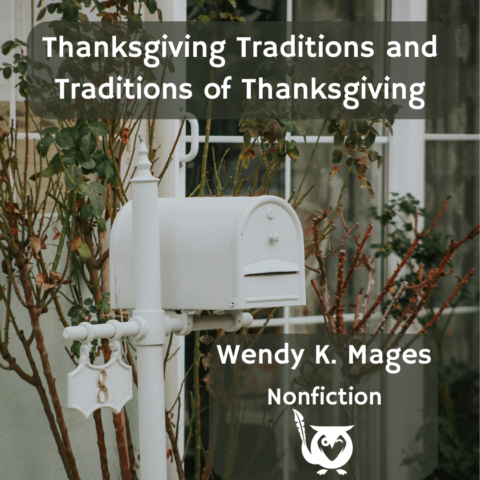
Image created on Canva
Pulling into the parking lot of the gourmet grocery, I’m surprised by the Thanksgiving traffic. The parking lot is much fuller than I expected. Feeling lucky and grateful to find a parking space, I quickly get out of my car, grab a cart, and hurry in to pick up a few last-minute items.
Before my recent move to this upscale New England town, inhabited by investment bankers, silk-stocking lawyers, and affluent entrepreneurs, I was a city dweller living in Massachusetts where, by law, all grocery stores are closed on Thanksgiving. So, for me, grocery shopping on the holiday feels like a novelty.
Then again, ordinary weekday shopping in this town often includes novel experiences.
In this affluent enclave, it’s not uncommon for ladies to leave designer handbags totally unattended in their grocery carts as they wander over to pick out a perfectly ripe melon or package of baby kale. This is astonishing! In the city, if you leave your bag unattended, it probably won’t be there when you return.
As I enter the grocery, it’s bustling with Thanksgiving Day shoppers whose grocery carts fill every aisle. I notice there are people who, like me, are searching for a few additional treats or missing flourishes.
Others are picking up fully prepared Thanksgiving dinners; whole perfectly roasted turkeys are packaged with all of the traditional trimmings; stuffing, cranberry sauce, and sweet potatoes, plus a lot of the gourmet grocery store’s specialties like maple roasted brussel sprouts and sautéed broccolini with garlic cloves, not to mention at least three or four different kinds of pie.
It’s a slightly unexpected twist to the traditional Norman Rockwell Thanksgiving dinner.
The busy aisles not only make getting the few things I need take longer than expected, but there’s also a line at every checkout counter. I get in line and remind myself that patience is a virtue.
As I’m standing there, I notice the lady checking out in front of me is visibly distressed. All of her groceries are bagged and ready to go, when I hear her tell the clerk that she was in such a hurry to get to the store, she didn’t notice her wallet wasn’t in her purse.
It becomes clear from the ensuing conversation that all the employees know this lady, a teacher in town and a frequent shopper. Yet, even though they know her, and she has less than $100 worth of groceries (a minuscule sum at this gourmet market), they’re still not willing to let her take her food home and come back tomorrow with her credit card. Not even on Thanksgiving.
“Don’t worry, I can cover your groceries,” I say. I’m not sure what prompted me to blurt out this offer. Perhaps it’s because I work with teachers and my mom was a teacher, or because I can put her groceries on my credit card and won’t have to pay the bill until after she reimburses me. Or perhaps it’s just the spirit of Thanksgiving.
I take out my credit card and hand it to the checkout clerk. The teacher promises to send me a check and dutifully writes my name and address on the back of the register receipt. At this moment, I’m more than confident she’ll repay me. Heading off to my family’s festivities, I’m pleased I could help a teacher in distress.
The next morning, I awaken to twinges of doubt; my city skepticism has begun kicking in. I wonder if the teacher really will keep her promise. A few days later, I realized I may have been hoodwinked.
It dawns on me that, in a few short months, I’ve been transformed from a savvy city dweller to one of those naïve shoppers who has, in effect, left her purse totally unattended. Mortified by this revelation, I try to repress it.
Each day when I check the mail, I become more and more uneasy. Each time I open the mailbox, I feel gullible, vulnerable, embarrassed. As I look through the profusion of holiday cards, catalogs, and monthly bills, a nagging voice inside my head chastises me for being such a fool — such an easy mark. My own stupidity infuriates me.
This mailbox ritual and a rising sense of apprehension persist well into December, when, sorting through the mail, I notice a small blue envelope from an address I don’t recognize.
I rip it open and there, with a check for the cost of the groceries, is a handwritten thank you note apologizing for the delay, gratefully acknowledging my assistance, and wishing me a joyful holiday and a prosperous new year.
Hungry for more? Don’t worry, we have more scrumptious reads ready for you:
- Feast Bouquet – Gratitude on Thanksgiving
- A Special Family Dinner – Enjoying a Meal Together
- Like a Spiders Web – Community and Cravings
- It’s Fruitcake Weather – a Holiday Tradition
***
🍵 We run on pure passion here at the Roost and every bit of help goes a long way! If you’d like to support our on-going efforts to keep our publication free for everyone, consider fueling us with a digital tea.

Wendy K. Mages
Wendy K. Mages, a Mercy University Professor, is a Pushcart Prize nominee and award-winning poet and author. She earned her doctorate in Human Development and Psychology at the Harvard Graduate School of Education and her master’s in Theatre at Northwestern University. To complement her research, she performs at storytelling events and festivals in the US and abroad.
To learn more about Wendy, her work, and to find links to her published stories and poetry, please visit her Mercy University Faculty page, website, and LinkedIn. You can also find Wendy on Instagram or Bluesky.