

Aomori — Japan’s Winter Kingdom
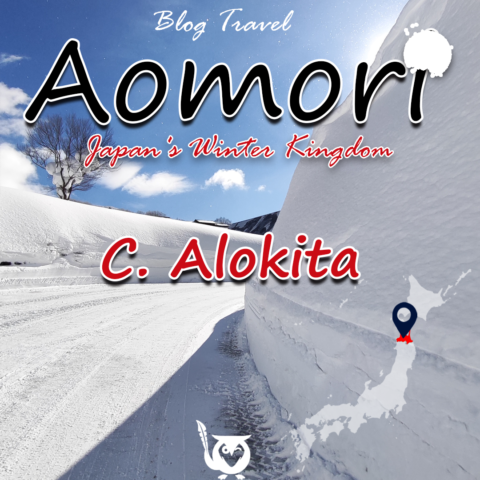
Image from C. Alokita
There are some places where winter is just a season, and then there are others where it strikes with unrelenting force. In the distant northern reaches of Japan’s largest island, Aomori Prefecture is an ambassador of the latter.
In February, I went there to see how many of the reports about Aomori would hold up to personal experience: that the snow piles up high enough to create walls, that the roadways disappear from view buried beneath miles and miles of snow-filled corridors, and that the entire city transforms into nothing so much as a weather pattern.
Even in Japan — a nation that has become accustomed to severe winters — Aomori can be, during the peak of winter travel, extremely inconvenient or downright hazardous. But for those attracted to the sublime periphery of nature, for those who will challenge winter on its own terms, Aomori provides one of the most remarkable landscapes in existence.
As it turns out, many of the stories were indeed true.
In Aomori, the snow reshaped everything. The streets shrunk down into narrow passageways between towering walls of compressed white; some walls rose above the passing traffic like fortresses. Buildings were half-merged into hard ice. The sky, always foggy and gray, supplied snowflakes that were sometimes slow and contemplative, and other times chaotic and violent.
Of all of the places I visited during my trip to Aomori, perhaps nowhere else did winter feel more alive than in the Hakkoda Mountains.
The Hakkoda Range holds a singular position in Japan’s historical imagination because of the memory of the 1902 Mount Hakkoda disaster, one of the world’s most disastrous mountain accidents. Being aware of this before traveling to the area added a layer of gravity to the scenery.
Winter’s beauty and potential danger coexisted simultaneously. The snow fields were pristine and almost hypnotic. Yet, each drift and gust contained the memories of what these mountains are capable of. Sukayu Onsen, the famous mountain inn located deep in the heart of this harsh environment, provided a home base for one night.
As the sun set over the mountain and a full-blown blizzard developed, I took a reckless curiosity and stepped outside into the blackness. The winds responded quickly. They blew against me with such force that I was forced to retreat backwards before taking more than a handful of steps. It was as though the mountain itself refused permission to enter.
The rest of the storm became nearly cinematic from inside my room. Outside my window were only massive walls of snow and millions of flakes continuing to fall. Some fell down slowly and meditatively. Others burst forth across my glass window wildly and unpredictably, blown by forces too intense to determine.
Watching the storm develop in that darkened environment, I began to seriously think about the Hakkoda disaster; The magnitude of that tragedy no longer felt historical but immediate. The blizzard made history accessible.
However, within Sukayu Onsen, winter’s intensity yielded to one of Japan’s oldest traditions of shelter. The grand, old communal bath within the inn provided a dramatic contrast to the ferocity that occurred outside.
Soaking in the hot mineral waters after facing such extreme cold temperatures seemed less like relief and more like a rite of passage: a fundamentally northern rhythm for enduring the seasons through warmth, wood, water, and stillness.
Leaving this stormy environment of alpine storms and historic remembrance behind, our next stop was farther back in time.
At Sannai Maruyama, Aomori’s large Jomon archeological site, the heavy snowfall produced an eerie sensation of temporal collapse. Under layers of white blanket, the reconstructed village appeared suspended between prehistoric times and the modern era.
The snow did more than make Sannai Maruyama beautiful; it also brought reality closer. One could easily picture fires burning behind wooden walls in ancient times — lives lived according to the same harsh winters that continue to dominate the region today.
Aomori’s culture, however, is not nearly as harsh as its winters. At the Nebuta Museum, the opposite side of Aomori presents itself with vibrant resistance to winter’s monotony. Enormous lit-up festival floats pulse with color and myth and movement, capturing Aomori’s effervescent spirit embodied in the Nebuta Festival.
After days spent surrounded by white environments and quiet snowfall, Nebuta’s powerful visual energy felt like finding balance with northern endurance’s quiet emotionality: if winter creates silence, Aomori responds with harmony.
Walking along Aomori Bay extended the landscape outwards towards the sea, wind, and winter light. Walking around Hirosaki Castle presented another perspective of northern loveliness: elegant history tempered by snow covering its grounds creating a largely monochromatic study in stillness and shape. These quiet moments provided their own clarity.
What makes Aomori such a memorable place is not just that it is aesthetically pleasing; to call the area “beautiful” would indeed be too simple. In this area, one finds something much rarer: a meeting with winter that has organized almost every aspect of daily life, historical existence, architectural style, and even memory.
Snow here does not exist merely as decoration; it determines how people move around the city, forms traditions, saves memories, and tests people’s respect.
Traveling to Aomori in February may have difficulties associated with sudden delays, dangers, and inconveniences. Yet, with some preparation, humbleness about weather conditions, and a willingness to find the sublime, you will see this trip become something much greater than simply traveling.
Enjoyed this? Check out some of these pieces from our other wonderful writers!
- Caught Between Sunset and Moonrise – Personal Essay
- In the Mediterranean at Midnight – Travel Romance Fiction
- Echoes of War: Shizugatake of Japan – Travel
- The Isle of Arran – Literary Travel
***
🍵 We run on pure passion here at the Roost and every bit of help goes a long way! If you’d like to support our on-going efforts to keep our publication free for everyone, consider fueling us with a digital tea.

C. Alokita
C. Alokita is a writer by passion. By day she's a scientist, quietly tinkering with chemicals in a lab corner. But by night her literary dreams emerge as she merges cold logic with poetic fire. She's fond of observing the universe, from galaxies to atoms, and believes that the most human thing one can do is leave little creations behind.