

Echoes of War: Shizugatake of Japan
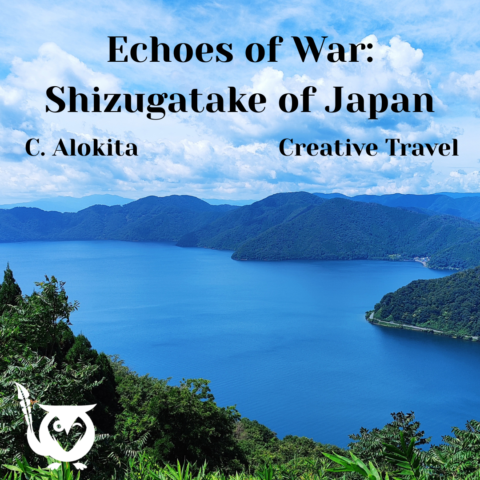
Image provided by author
A mountain peak with a weighty past stands on a ridge connecting two beautiful lakes of Japan: Shizugatake. From a distance it appears peaceful like any other green slope in rural Japan. But as you climb, you can feel the lingering silence of a decisive battle that took place here centuries ago.
I’ve been living in Japan for the past three years. Often curious about new places far away from the touristy hotspots, I visited Kinomoto town in Shiga prefecture in the summer of 2025. It takes about three hours from my home, Nagoya, to reach there.
I remember the day to be quite bright and warm, and I was starving for the fresh wind of Lake Biwa — Japan’s largest and oldest lake. I hurried.
I was excited to stay in a 200-year-old building — right by Lake Biwa — which had survived both the earthquakes of Japan and World War II. A few sips of cold green tea and the cool breeze from the lake drew my summer sweat away in a flash.
Speaking with the homeowners was a bit tough for me despite speaking Japanese quite well; they only speak in a unique local Shiga dialect. But they did manage to communicate some of the history of the mountain peak Shizugatake, which stands behind the homestay.
Shizugatake was the site of a 1583 battle that shaped Japan’s unification under samurai-lord Toyotomi Hideyoshi. What is now a quiet hiking route once thundered with soldiers, banners, and gunfire.
Standing there, the quiet of the present begins to blur with the echoes of the past, as if the land itself still remembers the clash of that decisive moment and quietly carries its memory through time.
The morning after my arrival, I set out to reach the summit. With the mountain still wrapped in the soft quiet of the early day, I began the climb. Cedar trees shaded the trail while moss carpeted the path. I took the cable car halfway to the top, then hiked to the summit.
The whole way was wrapped in green while cicada cries filled the forest; the unmistakable “sound of summer”, as they say in Japan.
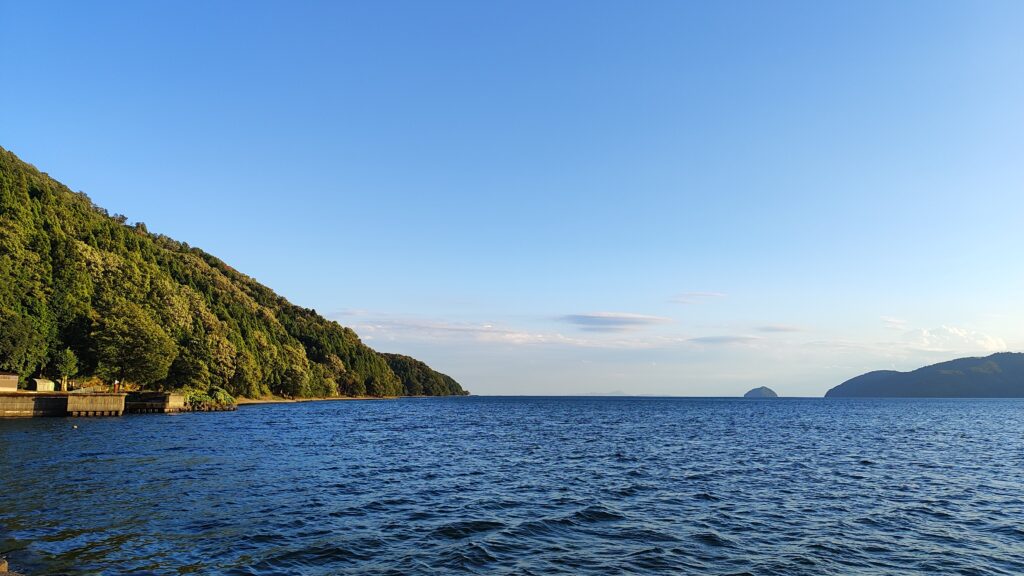
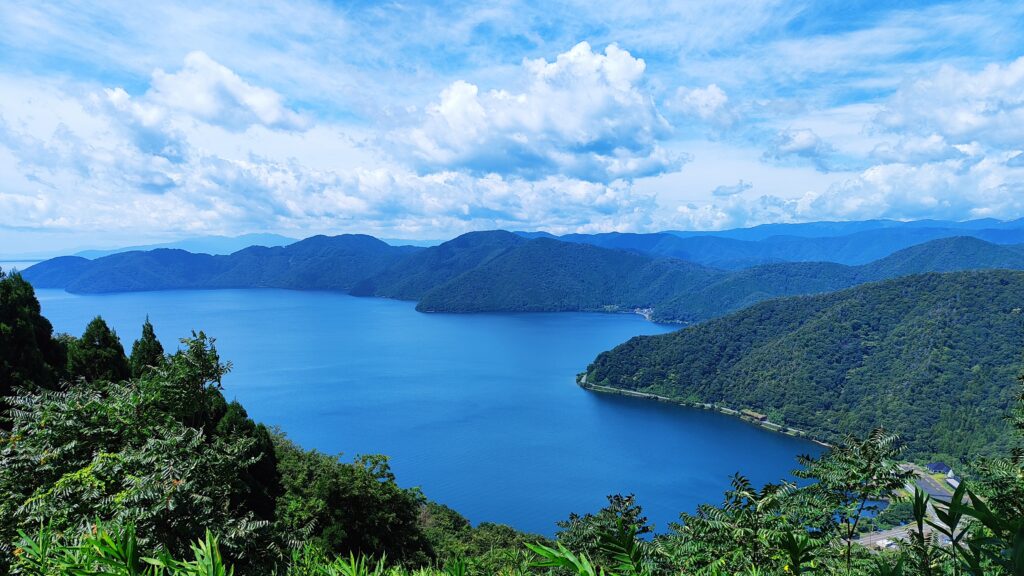
From the summit, Lake Biwa stretched toward the eastern horizon under the sun. Views of the town and rice fields appeared unchanged in the west. Time felt restrained here.
The wind moved through the trees with a soft insistence, sometimes with a sparkly sound of fūrin — Japanese wind chimes, which locals had hung from the wooden watch tower. Every time the wind picked up, they rang softly in clear glass notes. The sound blended with the rustling leaves and the distant calls of cicadas, adding a quiet, pleasant rhythm to the stillness of the mountain.
It was a simple detail, but it made the moment feel distinctly like summer in Japan.
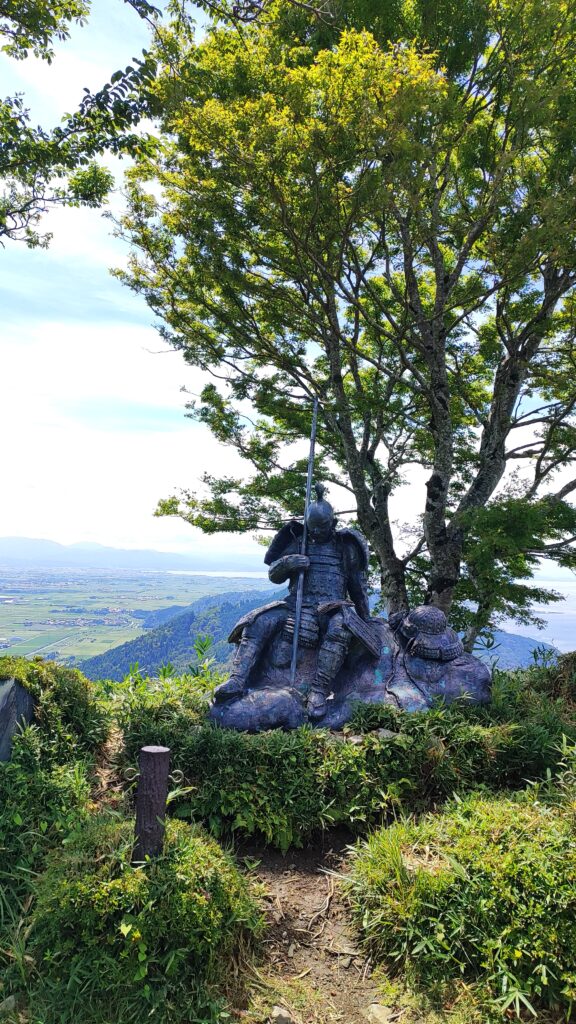
The summit area was well-maintained, with a monument at the top which honors the Seven Spears of Shizugatake, the warriors whose valor defined the battle. Reading their names, I wondered what drove them. Was it duty, pride, or just survival?
At a small rest hut nearby, vending machines hummed beside faded samurai illustrations. A local woman was sweeping the steps to the monument. While we chatted, she called the mountain “kaze no koe”, or the “voice of the wind”. Her tales added that unique shimmer that history books miss.
Many of the quietest landscapes on Earth are built over old battlefields. Shizugatake may well be more than a historical site. Like all wargrounds, it is a reminder that blood and serenity often share the same terrain.
Descending through the forest, I recalled once more how time fades all scars away. Shizugatake awaited behind, holding its history like a deep breath, ready to speak to whoever climbs next.
As the path led back down toward the villages, I thought of how I’d like to return someday to see it in a different season. Shiga gets heavy snow in winter; perhaps Shizugatake will offer a different look — the same trails, the watchtower, the forest, but everything covered in white instead of green. I think I’m quietly waiting to see the mountain like that one day.
Trips like this tend to stay with me for a while. Sometimes they turn into a few pages of writing, other times simply as refreshing memories or a scaffold for new ideas. As a scientist, I’ve seen how ideas don’t always start in the lab. Sometimes they begin during a walk in a quiet place like this, when your mind finally has space to wander a little.
Looking for more travel inspiration for your creativity? Read these!
- Dreaming Cuba: Tips for Travel
- Travel = Lazy Summer Days – Fitness for Creatives
- Basking in the Light of the “City of Paradise” – Literary Travel
🍵 We run on pure passion here at the Roost and every bit of help goes a long way! If you’d like to support our on-going efforts to keep our publication free for everyone, consider fueling us with a digital tea.

C. Alokita
C. Alokita is a writer by passion. By day she's a scientist, quietly tinkering with chemicals in a lab corner. But by night her literary dreams emerge as she merges cold logic with poetic fire. She's fond of observing the universe, from galaxies to atoms, and believes that the most human thing one can do is leave little creations behind.