
• Facebook
  • BlueSky
  • Instagram
  • GoFundMe
  • Threads
  • Mastodon
roostlogohead2cropped-transp-blue-owlS.pngroostlogohead2roostlogohead2
  • Home
  • All Magazine Issues
  • About
    • Vision and Mission
    • Meet the MockingOwls
      • Leadership Team
      • Editorial & Writing Team
      • Design & Web Team
      • Performing Arts & Tabletop RPG Team
    • Our Contributors
    • Keep the MockingOwls Roosting!
    • MockingOwl Roost Staff Services
    • Contact
  • Submission Guidelines
  • Blog
    • Artist Profiles
    • Best Of
      • Gaming Corner
      • Round Ups
    • Film and Theatre
      • The Acting Side
    • Inspiration for All
      • Positivity Corner
    • Fiction
    • Poetry
    • Music
      • Music Performance
      • Music Reviews
    • Reviews
      • Book Reviews – Fiction
      • Book Reviews – Nonfiction
      • Film Reviews
      • Tea Reviews
    • Resources
      • NaNoWriMo
      • Writing Prompts
      • Books for Writers
    • Series
      • Travel
        • Literary Travel
      • Fitness for Creatives
      • My Favorite Things
      • Writing Memories
      • Things I Wish I’d Said
  • MockingOwl Roost Workshops
  • Resources for Creatives
    • Presses Taking Unsolicited Submissions – No Agent Necessary
            No results See all results
            ✕
                      No results See all results

                      Tulatulahan, Part 6

                      Published by Vartan Koumrouyan at March 11, 2025
                      Categories
                      • Creative Nonfiction
                      • Series
                      • Travel
                      Tags
                      • civilization
                      • culture
                      • Exploration
                      • jungle
                      • Philippines
                      • philosophy
                      • strength
                      • travel
                      • Tulatulahan
                      • Uncle Norbing
                      • Vartan Koumrouyan
                      A person walks the wall of a terraced rice paddy - TEXT Tulatulahan Part 6, Travel Stories, Vartan Koumrouyan

                      Image by Helena Pfisterer from Unsplash

                      This is a serial. Read Part 1, Part 2, Part 3, Part 4, and Part 5 first.


                      Uncle Norbing looks like a mandarin orange with three long, white hairs on his chin. Sheryll calls him Uncle out of respect, but while he may be much older than us, he walks faster, his machete swinging at his toned waist. We follow him up and down the path toward the valley as he points out various landmarks.

                      “This,” he says, pointing to a thicket of giant, yellow-green bamboo that stands out bright against the darker canopy. “Edge of the field,” he says. 

                      We look, but see only swamp. After years of neglect, the half-hectare of rice field has reverted to its more primitive conditions. Uncle Norbing indicates a tall tree to his right, and another in the opposite direction, then points down the path again, gesticulating this way and that — east to west, north to south — drawing the boundary lines of our land.

                      The house itself overlooks all of that. From its windows, we can view the dip in the valley, the abandoned rice field, and the huge trees all at once. We can tell the border line between our land and Fernando’s nipa hut below without difficulty.

                      We can view far beyond that, too, all the way to the opposite slope of the northwest mountain range, where our friend Paranto goes on week-long expeditions to hunt the wild boar and green lizards. The terrain there is unforgiving, he says, full of leeches, scorpions, and snakes. Some people live there, too, unwilling to come near the National Road or the civilized world. 

                      But here at the border of our land, we can see in better detail the things that distance hides: the dark density of leaves, the murky color of the swamp water, and the boiling clouds of insects. These offer hints of the wilderness so close at hand. Uncle Norbing gestures across the expanse, his arm moving in a long, slow arc. 

                      “I came here first,” he says, with Sheryll translating his blend of Tagalog and Cuonnin for me. “You could buy a hectare for a hundred pesos if it touched the National Road, but here in the jungle it was free.” He pauses, and a glint comes into his eye. “It’s always been free.” 

                      I know what he’s referring to, and share the smile. Centuries ago, Spanish friars complained to their king about the difficulties they faced in trying to “civilize” the island tribes: Any time they gathered people in barrios around their churches, many of those people simply disappeared again into the wilderness around them.

                      We follow Uncle Norbing back up the hill toward our house as I consider this. Some modern people also choose to vanish into the jungle. Sheryll has told me that her uncle Alfredo wants to sell his house and go back to the mountains and their tree-covered foothills. 

                      He’s not averse to civilization, she’s said, but he doesn’t understand its obligations. With the peso devalued and his earnings too slim, he’s lost his “purchasing power”, as the modern lingo phrases it. But in the jungle, everything he needs already belongs to him. Technocratic rule pales in the face of such freedom. 

                      And he’s not the only one. 

                      I’ve seen young people exit the bustle along the National Road, leaving behind a church, a school, a barangay’s office, or just a crossroad, to go deeper into the hills for a more suitable place. The jungle is government property, and the government is elected by the people, after all. Thousands of hectares of unclaimed, valueless Spanish title deeds wait for them there.

                      So they construct small cabins in just four or five days, claiming the land, using whatever’s available, and they elevate it off the ground for ventilation and paint the mangium posts with motor oil to repel moisture and insects. It’s a faster, cheaper, and less long-term method than what we’ve built, but it serves their needs.

                      The officials don’t care. When I asked the barangay captain if I needed a permit to build my house, he just shrugged and replied, “I hereby give you my verbal agreement,” and that was that. I had no need for architects, maps, paperwork, or any official documents. In the jungle, it already belongs to us, so we’re free to do as we please.

                      So we mind our own affairs, unconcerned with the philosophy, social structure, or political parties that bog a “civilized” mind down. As I walk through our jungle with Uncle Norbing that day, I finally realize that man, if left to himself, won’t return to his primitive state like Hobbs pretended. Instead man will reinvent, rediscover, and reorient himself. Man makes himself new.

                      I laugh to myself, quietly so no one hears. Hobbs judged the world from his sedentary view, but these natives living in the jungle are happier than any others I’ve known. Not many foreigners come here to discover this. They prefer their short resort stays on the beaches, diving in the reefs, soaking in a tan. They’d rather watch the turtles play than see my jungle breathe.  

                      But in the barrios along the National Road, there are fewer people and cars. Life has been stripped of its urban frivolity, so the tourists aren’t interested. They see our rice fields and local customs as they shuttle by, and some turn their noses up. Perhaps they’ve lost the faculty to appreciate nature, or perhaps to them, we’re simply part of the wild decor.

                      I, by living here, know better now. I see the rhythms, and not just the form. Life here remains ever in motion, circling in predictable paths as easily seen by me now as the landmarks are by Uncle Norbing. 

                      A tricycle might sputter up the path in the morning, heading for work in the fields, then back home at sundown with some timber or bamboo in tow, and I’ll know that a neighbor isn’t just providing for his belly or family, but for his home as well. 

                      Or at harvest, I’ll see a carabao, driven by young boys and carrying palay sacks towards the mill, or guided by an older farmer as it pulls a well-laden carosa, and know that fresh rice might soon be traded for. I’ll see contentment in the boys’ and farmer’s faces and know their surety of the season and of this next year in their quiet, humble lives.

                      It’s no wonder Uncle Norbing moves with such ease on the trail ahead of me. He acquired his nonchalance step by step, day after day, through this hard but predictable labor. He carries his own authority, understands the clay soil, the sun, the shade, the sweat, the typhoon rain, and the mud. Each part of his day constitutes the whole of his life, and it is enough.

                      He doesn’t need a complicated thinking process, like Kant uses, to know about the transition of the will into the movement of the body. He simply moves. And his knowledge of causality wasn’t developed through refutations or extrapolations like Hume’s or Schopenhauer’s. He developed it by successfully plowing the mud of his fields year after year.

                      Philosophy, which Jason and I discussed without conclusion so many times in the midst of the wide city, has been put to rest by simple existence in the jungle. As Uncle Norbing crosses the yard toward my house and I look out across that vast expanse of jungle — his life experience — I recognize in that moment the same thing Nietzsche did when he hugged a beaten horse. 

                      I understand him.


                      Have you enjoyed this travel series? Here’s a few fictional series to try!

                      • Anatomy of a Memory, Part 1, Part 2 – Romantic Fiction
                      • Duped, Part 1, Part 2 – Science Fiction
                      • Jormungand, Part 1, Part 2, Part 3 – Science Fiction
                      • The Spirit of Ratnapur, Part 1, Part 2 – Historical Fiction
                      Vartan Koumrouyan
                      + postsBio

                      Vartan Koumrouyan lives in Paris and on the island of Palawan, Philippines.

                      Find more on Vartan’s YouTube.

                      • Vartan Koumrouyan
                        #molongui-disabled-link
                        Tulatulahan, Part 5
                      • Vartan Koumrouyan
                        #molongui-disabled-link
                        Tulatulahan, Part 4
                      • Vartan Koumrouyan
                        #molongui-disabled-link
                        Tulatulahan, Part 3
                      • Vartan Koumrouyan
                        #molongui-disabled-link
                        Tulatulahan, Part 2

                      Related posts

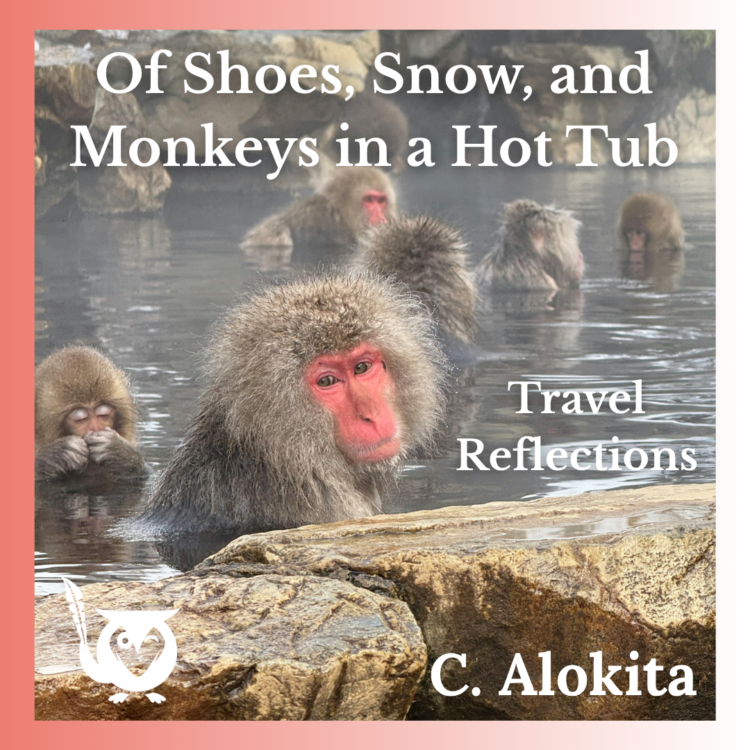
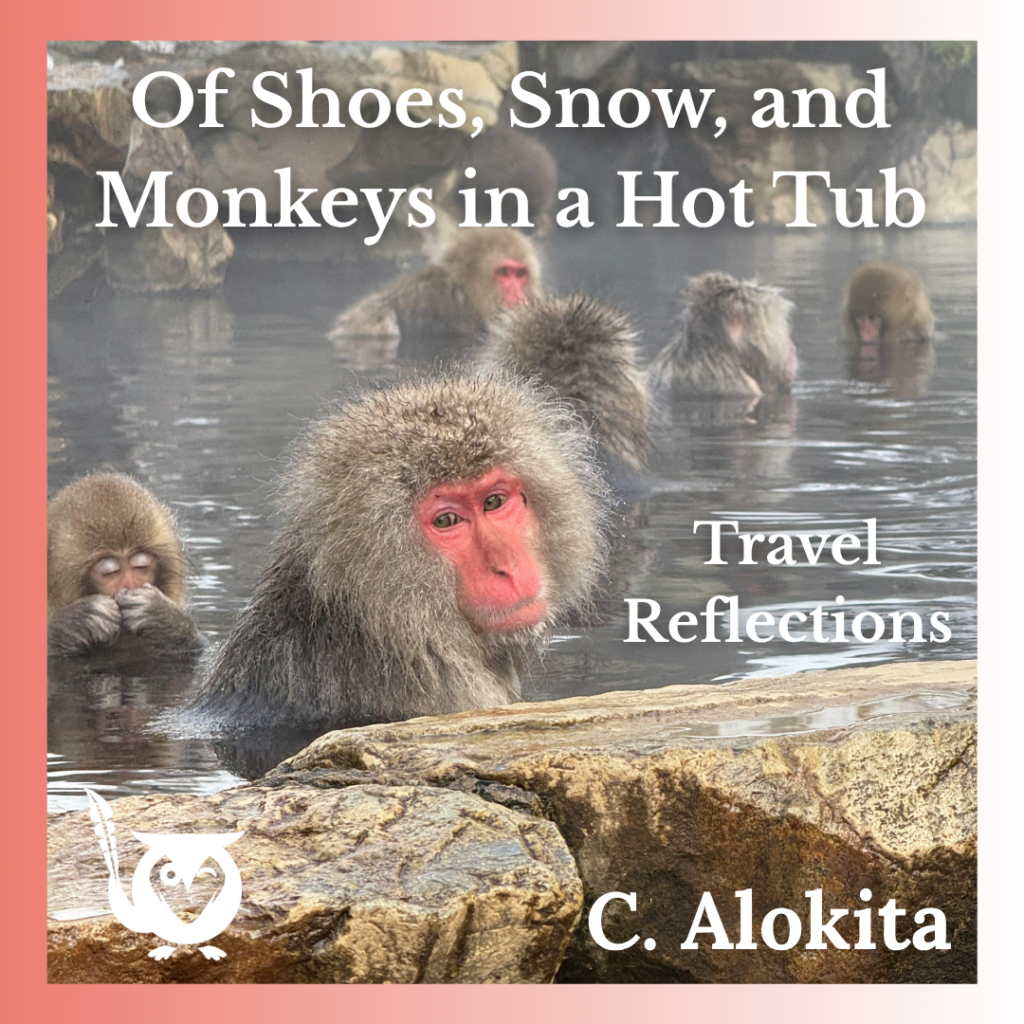
                      Picture of Japanese monkeys in a natural steam bath on someone's solo trip to Japan. TEXT: Of Shoes, Snow, and Monkeys in a Hot Tub - Travel Reflections - C. Alokita

                      Image created on Canva

                      June 24, 2026

                      Of Shoes, Snow, and Monkeys in a Hot Tub


                      Read more
                      Beautiful, vivid blue and green scenery of mountains surrounding a lake in Japan. View is from the peak of Shizugatake - TEXT: Echoes of WAr; Shizugatake of Japan - C. Alokita - Creative Travel

                      Image provided by author

                      March 16, 2026

                      Echoes of War: Shizugatake of Japan


                      Read more
                      A blue heron resting atop a dead tree, head somewhat tucked into its body. Clear blue sky behind the bird and tree. TEXT: Inspiration - The Joy of Walking - Tulip Chowdhury

                      Image created on Canva

                      March 9, 2026

                      The Joy of Walking


                      Read more

                      2 Comments

                      1. Storm Comes: Tulatulahan, Part 2 says:
                        March 24, 2025 at 12:03 pm

                        […] Continue the story with Part 3, Part 4, Part 5, and Part 6. […]

                        Reply
                      2. Pristine Beach: Tulatulahan, Part 5 says:
                        March 24, 2025 at 12:11 pm

                        […] Continue the story with Part 6. […]

                        Reply

                      Leave a Reply Cancel reply

                      Your email address will not be published. Required fields are marked *

                      "If there's a book that you want to read, but it hasn't been written yet, then you must write it."

                      Toni Morrison

                      Archives

                      • July 2026
                      • June 2026
                      • May 2026
                      • April 2026
                      • March 2026
                      • February 2026
                      • January 2026
                      • December 2025
                      • November 2025
                      • October 2025
                      • September 2025
                      • August 2025
                      • July 2025
                      • June 2025
                      • May 2025
                      • April 2025
                      • March 2025
                      • February 2025
                      • January 2025
                      • December 2024
                      • November 2024
                      • October 2024
                      • September 2024
                      • August 2024
                      • July 2024
                      • June 2024
                      • May 2024
                      • April 2024
                      • March 2024
                      • February 2024
                      • January 2024
                      • December 2023
                      • November 2023
                      • October 2023
                      • September 2023
                      • August 2023
                      • July 2023
                      • June 2023
                      • May 2023
                      • April 2023
                      • March 2023
                      • February 2023
                      • January 2023
                      • December 2022
                      • November 2022
                      • October 2022
                      • September 2022
                      • August 2022
                      • July 2022
                      • June 2022
                      • May 2022
                      • April 2022
                      • March 2022
                      • February 2022
                      • January 2022
                      • December 2021
                      • November 2021
                      • October 2021
                      • September 2021
                      • August 2021
                      • July 2021
                      • June 2021
                      • May 2021
                      • April 2021
                      • March 2021
                      • February 2021
                      • January 2021

                      Newsletter Signup Form

                      Newsletter Signup Form
                      © 2021 The MockingOwl Roost.

                      All Rights Reserved